

Quick Answer
Preparing a bubble tea shop falls into 6 areas: (1) market research and location → (2) capital and budget → (3) menu and ingredients → (4) equipment and tools → (5) packaging such as cups, lids and straws → (6) licensing and food safety. In Taiwan, food and beverage businesses with company or business registration must register on the Ministry of Health and Welfare’s Food Business Registration Platform; when opening overseas, also check local food regulations and ingredient import rules.

Step 1: Market Research and Location
Competition among Taiwanese drink shops is intense: according to the Ministry of Economic Affairs’ Department of Statistics, Taiwan had 28,788 beverage shops at the end of September 2025, including 16,113 hand-shaken tea shops (see Bubble Tea Market Trends). Before choosing a location, check at least:
- Foot traffic by time of day (office workers, students, tourists)
- Competing shops and price ranges within walking distance
- Rent as a share of projected revenue
- Demand from delivery platforms

Step 2: Capital and Budget
Startup capital usually covers rent and deposit, fit-out, equipment, the first stock of ingredients and packaging, staff, marketing, and at least several months of working capital. Amounts vary widely by location and store format, so build the budget line by line from real quotes and keep a contingency.
To work out cost per cup, convert ingredient usage into a per-cup cost; for example, the fruit syrup dosage guide lists syrup per cup and cups per bottle.
Step 3: Menu and Ingredients
Your menu decides what to buy. Typical ingredient categories for a bubble tea shop:
| Category | Common items |
|---|---|
| Tea | Black tea, green tea, oolong, Four Seasons Spring, plus no-filter tea bags and brewing bags |
| Fruit syrups | Lemon, passion fruit and mango juices, plus fructose, cane sugar syrup and brown sugar syrup |
| Flavored powders | Non-dairy creamer, milk foam powder, milk tea powder, smoothie powder, pudding powder |
| Pearls and toppings | Tapioca pearls, popping boba, agar boba (crystal boba), nata de coco, fruit jams |
| Canned goods | Red bean, mung bean, taro, grass jelly drink, canned fruit |
Start with 10 to 20 core drinks and work back to the ingredients, to avoid excess stock and waste. For topping differences, see Tapioca Pearls vs Boba vs Popping Boba vs Crystal Boba.
Step 4: Equipment and Tools
| Type | Common items | Purpose |
|---|---|---|
| Tea equipment | Commercial tea brewer, tea extraction machine, steam water boiler | Consistent tea brewing |
| Dosing equipment | Cane sugar dispenser, powder dispenser | Consistent sweetness and portions in every cup |
| Preparation equipment | Shaker machine, cup sealing machine | Faster drink output |
| Prep equipment | Small tapioca pearl cooker | Less manual stirring when cooking pearls |
| Tools | Shakers, measuring cups, ounce cups, insulated tea barrels, tea strainers, syrup pumps, topping strainers | Daily drink-making and prep |
Tang Sugar supplies many of these items. Equipment voltage (for example 110V) must match the electrical standard of the country where you open, which is especially important overseas.
Step 5: Packaging
Cups, lids, straws and sealing film are consumed every day. When choosing them, consider:
- Cup size: common sizes include 16oz and 22oz (1 US fl oz is about 29.6ml); the cup size sets how much tea and syrup goes into each drink. See Bubble Tea Cup Sizes.
- Material: PP and PET differ in clarity and heat resistance; sealed cups need compatible sealing film. See PP vs PET Cups.
- Straws: wide straws for pearl drinks; some markets restrict plastic straws, so consider PLA or paper straws.
Step 6: Licensing and Food Safety
Taiwan: Food Business Registration
According to the Nantou County Public Health Bureau, food and beverage businesses with business or company registration must register on the Ministry of Health and Welfare’s Food Business Registration Platform; failure to register can be fined NT$30,000 to NT$3,000,000. Business registration and other local formalities are also needed before opening.
Opening Overseas
Overseas shops need local business registration and hygiene compliance, and must also check ingredient import rules: food ingredients, labeling language, allergen labeling and import documents. To import ingredients from Taiwan, see How to Import Bubble Tea Ingredients from Taiwan.
Food Safety Management
Set SOPs for receiving inspections, storage temperatures, shelf-life control and cleaning records, and ask suppliers for test reports and factory certifications.
Pre-Opening Checklist
- Trade area research and lease confirmed
- Budget and cost-per-cup calculation
- Final menu and ingredient list
- Equipment, tools and packaging ordered
- Business registration and food business registration
- Staff training and standard operating procedures (SOPs)
- Soft opening and menu adjustment
If you’d like help planning, Tang Sugar offers tea shop opening services covering product structure, ingredient setup, opening process and operations planning; you can also request samples to test your menu.
Products in this article
All 8 Tapioca Pearls →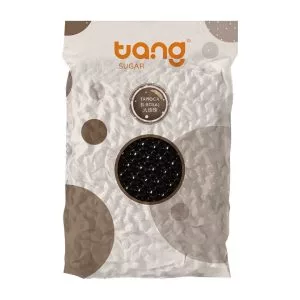
FAQ
What equipment do I need to open a bubble tea shop?
Common equipment includes a commercial tea brewer or extraction machine, steam water boiler, cane sugar dispenser, powder dispenser, shaker machine, cup sealing machine and pearl cooker, plus tools such as shakers, measuring cups, insulated tea barrels and tea strainers.
What registration does a drink shop need in Taiwan?
Besides business or company registration, food and beverage businesses must register on the Ministry of Health and Welfare’s Food Business Registration Platform; failure to register can be fined NT$30,000 to NT$3,000,000.
How should I choose ingredients for a bubble tea shop?
Decide your core menu first, then work back to the tea, syrups, powders and toppings; compare cost per cup and supply reliability, and check suppliers’ food safety certifications and test reports.
Can an overseas bubble tea shop import ingredients from Taiwan?
Yes. Check the importing country’s food regulations, labeling and import documents, and choose a supplier that can provide export documents and compliance support.
How much does it cost to open a bubble tea shop?
There’s no fixed amount; it depends mainly on rent and deposit, fit-out, equipment, first ingredients and packaging, staff and working capital, plus franchise fees if franchising. List quotes for each item, add them up and keep several months of working capital.
Is a bubble tea shop profitable?
It depends on daily cups sold, average ticket, gross margin and fixed costs. Do a break-even calculation before opening to see how many cups a day you need to sell; see How to Calculate Bubble Tea Shop Profit Margin.
What licenses does a bubble tea shop need in Taiwan?
Food businesses with company or business registration must complete food business registration and follow the Regulations on Good Hygiene Practice for Food (GHP), such as staff health checks; premises must also meet local building and fire codes. See Food Business Registration in Taiwan and Bubble Tea Shop Food Hygiene.
Further Reading
- How to Cook Chewy Tapioca Pearls: Commercial SOP
- Fruit Syrup Dosage Guide for 500ml and 700ml Drinks
- Bubble Tea Market Trends: Global Market Size and Taiwan Shop Data
- Bubble Tea Ingredients List: Supplies, Packaging and Equipment
- Food Business Registration in Taiwan
Sources
- Nantou County Public Health Bureau: Food business registration (in Chinese)
- Commercial Times (2025-12-08): Ministry of Economic Affairs beverage shop statistics (in Chinese)
- Tang Sugar product list (March 2026 edition)

