

Quick Answer
Non-dairy creamer (creamer) is a product used in place of milk or cream in coffee and tea drinks. English Wikipedia lists its typical ingredients as vegetable oil, corn syrup solids, sweeteners and flavorings, and often sodium caseinate, a milk protein. So “non-dairy” does not always mean free of milk ingredients, and people with milk allergies should read the label. Since 1 July 2018, Taiwan has banned partially hydrogenated oils in food, so check the fat source when buying creamer. Creamer and fresh milk each have their place: creamer gives a consistent flavor and stores at room temperature; fresh milk tastes natural but must be refrigerated.
Non-Dairy Creamer Ingredients
According to the English Wikipedia article “Non-dairy creamer”, common ingredients include:
| Ingredient | Purpose |
|---|---|
| Vegetable oil | Gives a smooth, cream-like mouthfeel |
| Corn syrup solids | Sweetness and body |
| Sodium caseinate | Milk protein derivative that helps emulsify and adds body |
| Emulsifiers and stabilizers | Keep the fat evenly dispersed so it doesn’t separate |
| Sweeteners and flavorings | Adjust the flavor |
Formulas vary by brand and product, so always check the ingredient list on the package.
Is Non-Dairy Creamer Really Dairy-Free?
Not always. Wikipedia notes that many non-dairy creamers contain casein, a protein from milk, which is why some classify them as dairy products. People with milk allergies should look for casein, whey and other milk ingredients on the label; people with lactose intolerance should check whether the product contains lactose.
A Short History of Creamer
Wikipedia records that an early powdered creamer, Pream, was launched in 1952, made from dehydrated cream and sugar. Coffee-Mate, launched in 1961, replaced most of the milk fat with vegetable oil and reduced the milk protein, so it dissolved easily in hot drinks, and creamer became widespread.
Creamer and Hydrogenated Oil: Taiwan’s Rules
To mimic milk fat, early creamers often used hydrogenated vegetable oil. In 2016 Taiwan’s Ministry of Health and Welfare announced restrictions on hydrogenated oils, ruling that from 1 July 2018 (by manufacturing date), partially hydrogenated oils may not be used in food. Partially hydrogenated oils are oils that have been hydrogenated but not fully saturated (iodine value above 4); they contain artificial trans fats, which are harmful with long-term intake. Other markets have similar rules, such as the US FDA’s removal of partially hydrogenated oils from the GRAS list.
Creamer vs Fresh Milk for Bubble Tea
| Comparison | Non-dairy creamer | Fresh milk |
|---|---|---|
| Storage | Room temperature; keep dry after opening | Refrigerated, short shelf life |
| Flavor | Consistent aroma, rich milk tea taste | Natural dairy flavor, lighter |
| Operation | Weigh and dissolve, consistent quality | Needs cold chain and accurate portioning |
| Best for | Classic milk tea, high-volume stores, regions where cold chain is difficult | Fresh milk tea, drinks that highlight natural dairy flavor |
Many stores use both: creamer for classic milk tea and fresh milk for the fresh milk tea line. For stores abroad where cold chain costs are high, creamer powder is a stable choice.
Tang Sugar Non-Dairy Creamer Products
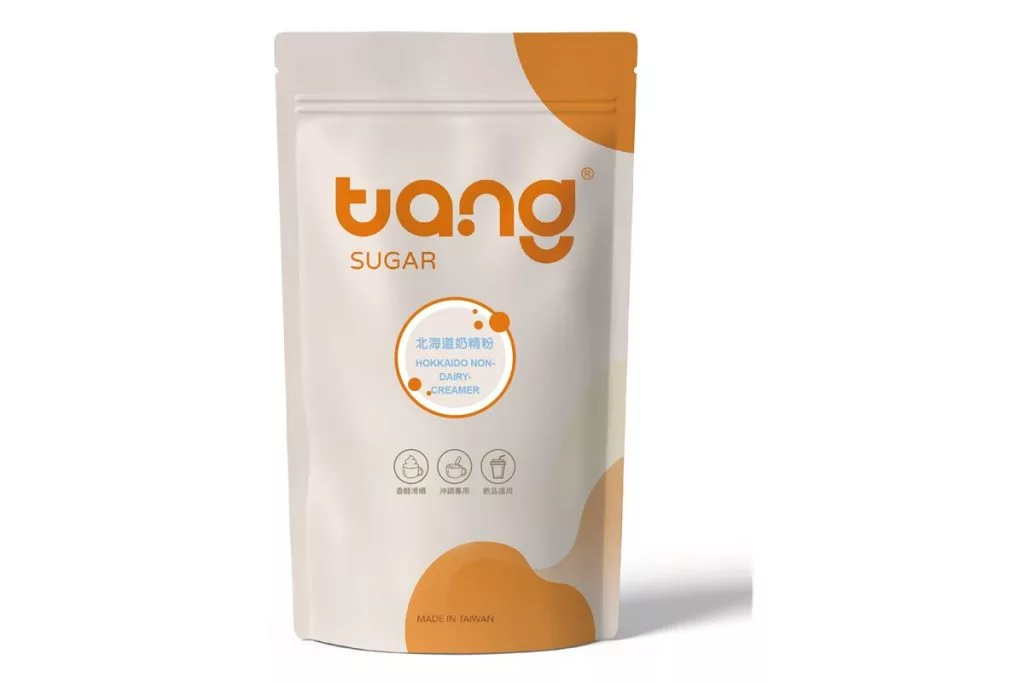
Tang Sugar’s creamer range includes Hokkaido creamer, rich creamer, premium creamer, classic creamer, top-grade creamer and brown sugar creamer, packed 1 kg per bag, 20 bags per carton. We also supply milk tea powder, milk foam (cheese foam) powder and other flavor powders; see our powders or request samples to test.
Products in this article
All 5 Non-Dairy Creamer →
FAQ
What is non-dairy creamer made of?
Common ingredients are vegetable oil, corn syrup solids, sweeteners, flavorings and emulsifiers, and some products contain milk proteins such as sodium caseinate. Check the package for the actual ingredients.
Does non-dairy creamer contain milk?
Sometimes. Many non-dairy creamers contain casein, a protein from milk, so people with milk allergies should read the ingredient label.
Does creamer in Taiwan still contain trans fat?
Taiwan’s Ministry of Health and Welfare has banned partially hydrogenated oils in food from 1 July 2018 (by manufacturing date). You can still check the ingredient list and the trans fat line on the nutrition label.
Should a bubble tea shop use creamer or fresh milk?
Creamer stores at room temperature and gives a consistent flavor, suiting classic milk tea and high-volume stores; fresh milk tastes natural but must be refrigerated. Many stores use both, depending on the drink.
Is creamer a dairy product?
Not necessarily. Creamer is based on vegetable oil and corn syrup solids, but some products contain sodium caseinate (a milk protein), so “non-dairy” does not always mean free of milk ingredients. Read the label if you have a milk allergy.
What is the difference between creamer and milk powder?
Milk powder is a dairy product made by drying milk. Creamer is made mainly from vegetable oil and corn syrup solids to replace milk or cream, and some products contain milk proteins such as sodium caseinate. Their ingredients are different; check the package label.
Where can I buy non-dairy creamer for a bubble tea shop?
Bubble tea shops usually buy wholesale from ingredient suppliers. When choosing, check the ingredient label, milk allergen labeling, solubility and milky flavor, and test samples first. See Tang Sugar’s creamers in our powders or request samples.
Are there different grades of non-dairy creamer?
Yes. Non-dairy creamer comes in different specifications depending on fat content, protein, solubility and intended use (milk tea, coffee or baking), and suppliers usually identify them by grade or model. Ask for the specification sheet and ingredient list and test a few grades in your drinks; Tang Sugar can recommend options for your menu and send samples.
Further Reading
- Popping Boba vs Agar Boba vs Tapioca Pearls
- How to Open a Bubble Tea Shop: What You Need
- Why Is Thai Milk Tea Orange?
Sources
- Wikipedia: Non-dairy creamer
- Taiwan Ministry of Health and Welfare: Partially hydrogenated oils banned in food from 1 July 2018 (in Chinese)
- Tang Sugar product list (March 2026 edition)

