

Quick Answer
Bubble tea originated in Taiwan in the 1980s, but who invented it is still disputed. Chun Shui Tang in Taichung says its store manager Lin Hsiu-hui added tapioca balls to iced milk tea in 1987; Hanlin Tea House in Tainan says its founder Tu Tsung-ho was inspired by white tapioca balls at a local market in the 1980s. The two companies were in litigation for about 10 years, and the court found that bubble tea is a new type of drink, not a patented product, so any shop may make it.

Before Bubble Tea: Taiwanese Foam Tea
Before bubble tea appeared, “foam tea” (paomo hongcha) was already popular in Taiwan: tea, sugar and ice shaken in a cocktail shaker until a fine foam formed. English Wikipedia also lists foam tea as the predecessor of bubble tea.
This explains why “hand-shaken drinks” is still the Taiwanese name for bubble tea shops: the shaking culture of foam tea came first, and bubble tea was born when tapioca balls were added.
Claim 1: Chun Shui Tang, Taichung
According to a 2019 ETtoday report, Chun Shui Tang says that in 1987 its then store manager Lin Hsiu-hui, at the Siwei Street store in Taichung, added tapioca balls, then served as a dessert, to iced milk tea. The drink became a hit and grew into today’s bubble tea.
Newtalk reports that Chun Shui Tang itself was founded in 1983 by Liu Han-chieh. English Wikipedia dates Chun Shui Tang’s bubble tea to 1988, one year later than the 1987 date in Chinese-language reports, which is worth noting when citing sources.
Claim 2: Hanlin Tea House, Tainan
Hanlin Tea House was founded in Tainan in 1986 by Tu Tsung-ho. According to Business Today, Tu was inspired by white tapioca balls he saw at Tainan’s Yamuliao Market and added them to milk tea. English Wikipedia presents both claims, with Hanlin stating that Tu came up with bubble tea in 1986.
The Two Claims Compared
| Item | Chun Shui Tang (Taichung) | Hanlin Tea House (Tainan) |
|---|---|---|
| Key person claimed | Store manager Lin Hsiu-hui | Founder Tu Tsung-ho |
| Company founded | 1983, by Liu Han-chieh (Newtalk) | 1986, by Tu Tsung-ho (Business Today) |
| How it was invented | Added tapioca balls to iced milk tea | Inspired by white tapioca balls at a market |
| Year in reports | 1987 (ETtoday); 1988 in English Wikipedia | 1986 in English Wikipedia |
What Did the Court Decide?
According to ETtoday and English Wikipedia, the two companies went to court over the origin of bubble tea starting in 2009, and the dispute lasted about 10 years. The 2019 ruling stated that bubble tea is a new type of drink rather than a patented product, that anyone and any shop can make it, and that there is no need to fight over who was first.
In other words, the court did not name either one as the sole inventor. That is why shops around the world can freely sell bubble tea, and why “Taiwanese bubble tea” is a drink category that belongs to Taiwan rather than a patent owned by a single brand.
Where Does the Name “Boba” Come From?
In Taiwan, large tapioca pearls are called “boba”. English Wikipedia records that the name comes from a nickname of Hong Kong actress Amy Yip. In the United States, especially in Asian American communities, “boba” is often used to mean bubble tea itself, a usage that is less common in Asia. For how pearls, boba and other toppings differ, see Popping Boba vs Agar Boba vs Tapioca Pearls.
How Did Bubble Tea Spread Around the World?
English Wikipedia notes that Taiwanese immigrants brought bubble tea to the United States in the 1990s, first around Los Angeles County in California, and from there it spread worldwide. According to Grand View Research, the global bubble tea market was estimated at about US$3.3 billion in 2025, with North America accounting for about 35.6%. More figures are in Bubble Tea Market Trends.
For shops outside Taiwan, “Taiwanese bubble tea” is a selling point in itself, so more and more brands buy tapioca pearls, tea leaves and syrups directly from Taiwan to keep the authentic taste. Tang Sugar provides bubble tea ingredient supply and export services and can help overseas buyers request samples.
Products in this article
All 8 Tapioca Pearls →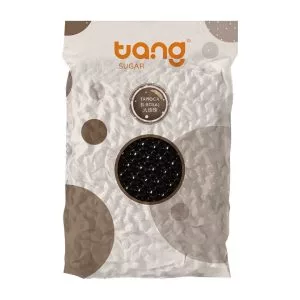
FAQ
Who invented bubble tea?
It is still disputed. Chun Shui Tang in Taichung says its store manager Lin Hsiu-hui invented it in 1987; Hanlin Tea House in Tainan says founder Tu Tsung-ho was inspired by tapioca balls at a market. In its 2019 ruling, the court held that bubble tea is not a patented product and there is no need to argue over who was first.
When was bubble tea invented?
Sources differ, but the dates fall between 1986 and 1988: Chinese-language reports give 1987 for Chun Shui Tang, English Wikipedia gives 1988, and Hanlin Tea House claims 1986. What is certain is that bubble tea appeared in Taiwan in the late 1980s.
Why do Americans call bubble tea “boba”?
According to English Wikipedia, “boba” comes from the Taiwanese term for large tapioca pearls, which in turn comes from a nickname of Hong Kong actress Amy Yip. In Asian American communities, boba is often used to mean bubble tea itself.
Who won the case between Chun Shui Tang and Hanlin?
According to ETtoday, the court did not name either party as the sole inventor. It found that bubble tea is a new type of drink, not a patented product, and that anyone and any shop may make it.
Where did bubble tea originate?
Bubble tea originated in Taiwan in the 1980s. Both Chun Shui Tang in Taichung and Hanlin Tea House in Tainan say they invented it.
Is bubble tea Taiwanese or Chinese?
Bubble tea is Taiwanese. Both companies that claim to have invented it are in Taiwan, and the drink spread from Taiwan to the rest of Asia and, through Taiwanese immigrants in the 1990s, to the United States.
Further Reading
- How Are Tapioca Pearls Made? From Tapioca Starch to Finished Boba
- What Is Tapioca Starch? Where the Main Ingredient of Boba Comes From
- The Tang Sugar Brand Story
- Bubble Tea, Boba, Pearl Milk Tea: What Is It Called in English?
- Instant (Shelf-Stable) Tapioca Pearls and DIY Bubble Tea Kits
Sources
- ETtoday (2019-07-31): Ruling after a 10-year dispute over the origin of bubble tea (in Chinese)
- Newtalk (2019-07-31): Chun Shui Tang and Hanlin’s dispute over the origin of bubble tea (in Chinese)
- Business Today (2022-06-30): Report on Hanlin Tea House founder Tu Tsung-ho (in Chinese)
- Wikipedia: Bubble tea
- Grand View Research: Bubble Tea Market Size Report

