

Quick Answer
FOB, CFR and CIF share the same risk transfer point: risk passes to the buyer when the goods are loaded on board the vessel at the port of shipment. The difference is cost: under FOB (Free On Board) the buyer pays ocean freight and insurance; under CFR (Cost and Freight) the seller pays freight to the destination port; under CIF (Cost, Insurance and Freight) the seller pays freight and, under Incoterms 2020, buys insurance on at least Institute Cargo Clauses (C) for 110% of the goods’ value. According to the International Chamber of Commerce (ICC), these three rules apply only to sea and inland waterway transport.
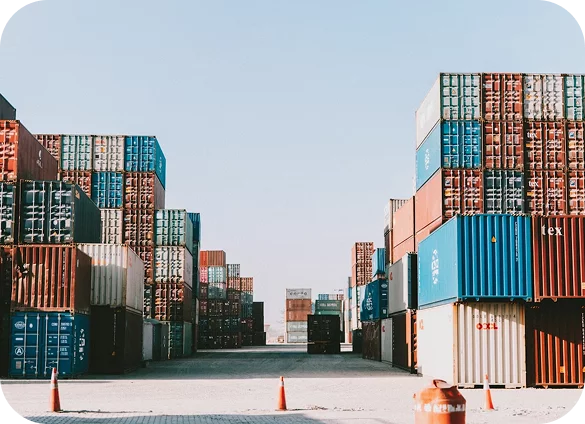
FOB vs CFR vs CIF Comparison Table
| Item | FOB | CFR | CIF |
|---|---|---|---|
| Full name | Free On Board | Cost and Freight | Cost, Insurance and Freight |
| Who pays ocean freight | Buyer | Seller | Seller |
| Who buys insurance | Buyer decides | Buyer decides | Seller (minimum ICC (C)) |
| Risk transfer | When loaded on board | When loaded on board | When loaded on board |
| Who books the vessel | Buyer (or its forwarder) | Seller | Seller |
| Export clearance | Seller | Seller | Seller |
| Import clearance and duties | Buyer | Buyer | Buyer |
| Transport mode | Sea and inland waterway only | Sea and inland waterway only | Sea and inland waterway only |
The Most Common Misunderstanding: CIF Doesn’t Mean the Seller Bears Risk to the Destination
Many people think CIF means “the seller is responsible until the goods reach the destination port”. In fact the seller only pays freight and insurance to the destination; risk passes to the buyer when the goods are loaded at the port of shipment. If the goods are damaged at sea, the buyer claims against the insurer under the policy terms.
Also, CIF only requires the seller to buy minimum ICC (C) cover, which is narrower than ICC (A). For high-value goods or goods prone to moisture or damage, the buyer can require higher cover in the contract or buy extra insurance. (CIP, the other rule where the seller pays carriage and insurance, requires ICC (A) under Incoterms 2020.)
Importing Bubble Tea Ingredients: Which Should You Choose?
| Your situation | Consider |
|---|---|
| You have your own forwarder and want to control sailing schedules and freight | FOB |
| You want the seller to arrange shipping to the destination port and buy your own insurance | CFR |
| You want the seller to arrange shipping and basic insurance | CIF (check whether the insurance cover is enough) |
| You want the seller to deliver to your door, possibly including import duties | DAP or DDP (responsibilities and prices differ widely; ask clearly when quoting) |
For containerized shipments, the ICC also suggests considering FCA, CPT or CIP, which work for any transport mode. For all 11 Incoterms 2020 rules, see How to Import Bubble Tea Ingredients from Taiwan.
5 Things to Check on a Quotation
- A named place after the rule: for example “FOB Keelung” or “CIF Los Angeles”, stating Incoterms 2020.
- Which costs are included: who pays terminal handling, documentation and destination charges.
- Insurance cover: whether CIF covers only ICC (C).
- Lead time and sailing: production time and estimated departure.
- Payment terms: T/T or L/C, and when payment is due.
Tang Sugar’s Trade Terms
Tang Sugar’s Trade Terms & Process page summarizes the Incoterms rules we commonly use and the steps of a deal. If a shipment involves a third country or multi-country production, our triangular and multilateral trade service helps divide transport risk and responsibility clearly. Questions about a quote or terms? Contact us.
FAQ
What is the difference between FOB and CIF?
Under FOB the buyer pays ocean freight and insurance; under CIF the seller pays freight and buys at least ICC (C) insurance. In both, risk passes to the buyer when goods are loaded at the port of shipment, and both apply only to sea and inland waterway transport.
What is the difference between CFR and CIF?
Under CFR the seller pays only freight and the buyer decides on insurance; under CIF the seller also buys insurance on at least ICC (C) terms for 110% of the value.
When does risk pass to the buyer under CIF?
When the goods are loaded on board at the port of shipment, not when they arrive at the destination port.
Can FOB be used for air freight?
According to the ICC, FOB, CFR and CIF apply only to sea and inland waterway transport; for air freight or containers, consider FCA, CPT or CIP.
What are Incoterms 2020?
Rules published by the International Chamber of Commerce (ICC) that set how costs, risks and responsibilities are divided between buyer and seller; FOB, CFR and CIF are among them.
What is the difference between EXW and FOB?
Under EXW (Ex Works) the seller delivers by making the goods available at its own factory or warehouse, and the buyer handles export clearance, transport to port and onward shipping; under FOB the seller clears the goods for export and loads them on the buyer’s nominated vessel. For buyers new to exporting, FOB is usually simpler than EXW.
What is the difference between FCA and FOB?
Under FCA (Free Carrier), risk passes when the goods are handed to the buyer’s carrier at a named place, and it works for any mode, including containers and air; FOB applies only to sea and inland waterway transport, with risk passing when goods are loaded on board.
What does an FOB price include?
An FOB price usually includes the goods, packaging, transport to the port of shipment, export clearance and costs up to loading; ocean freight, insurance, destination charges and import duties are paid separately by the buyer.
Further Reading
- Triangular Trade Process: Orders, Shipping, Payment and Documents
- How to Import Bubble Tea Ingredients from Taiwan
- What Is a Switch Bill of Lading?
- How to Choose Cargo Insurance: ICC (A), (B) and (C)
Sources
- International Chamber of Commerce: Incoterms® 2020 checklist
- Trade Finance Global: Carriage and insurance paid to (CIP) Incoterms® 2020 rule
- Röhlig Logistics: Incoterms 2020 CIF
- Tang Sugar: Trade Terms & Process

