

Quick Answer
Bubble tea pearls can be classified three ways: (1) size: large pearls (boba), medium pearls and mini pearls; (2) color and recipe: classic black pearls, white pearls and golden pearls; (3) processing: raw pearls that must be cooked, frozen pearls that only need heating, and shelf-stable pearls that need no refrigeration and suit small portions. When choosing, consider your menu positioning (texture and look), your volume and staffing, and your storage and prep. All are made mainly from tapioca starch; different added ingredients change the color and texture.
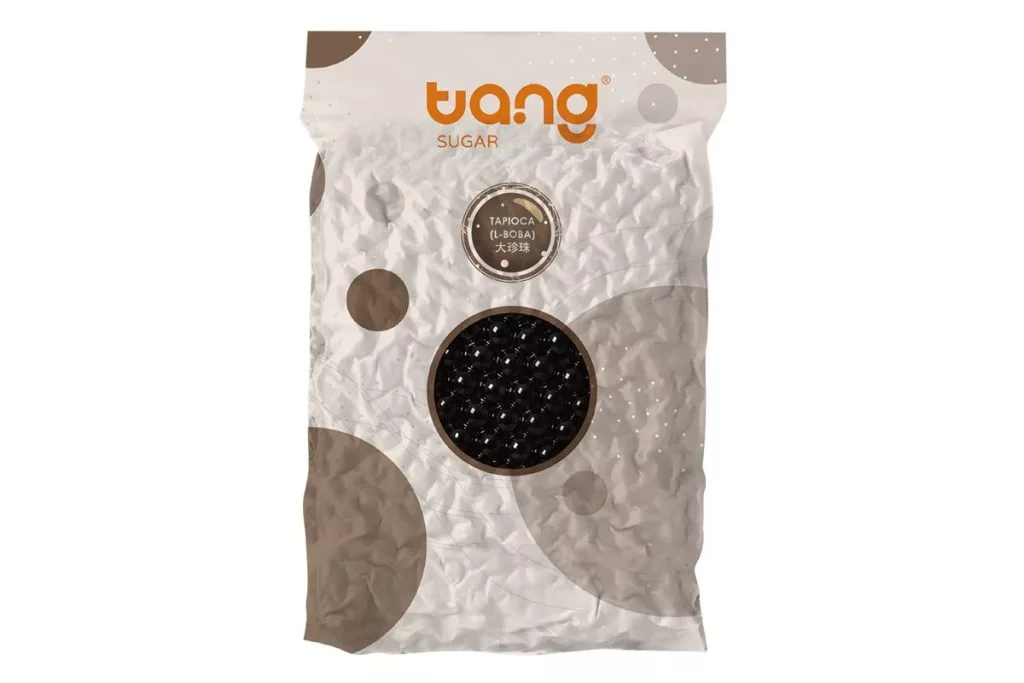
By Size
| Type | Description | Best for |
|---|---|---|
| Large pearls (L-BOBA) | Big with a pronounced bite; called boba in Taiwan | Bubble milk tea, brown sugar boba milk |
| Medium pearls (M-BOBA) | Between large and mini | A balance of easy sipping and bite |
| Mini pearls (MINI-BOBA) | Small and easy to sip | Desserts, drinks with thinner straws, mango pomelo sago |
The English Wikipedia article “Tapioca pearl” notes that commercial pearls are usually 5 to 10 mm in diameter, while early Taiwanese pearls were only about 2.1 mm. For pearls vs boba, see Popping Boba vs Agar Boba vs Tapioca Pearls.
By Color and Recipe
| Type | Look | Notes |
|---|---|---|
| Black pearls | Deep black | The most common, paired with brown sugar flavor |
| White pearls | Translucent or milky white | Clear look, great in fruit tea and fresh milk |
| Golden pearls | Golden yellow | Eye-catching, good for signature drinks |
Wikipedia notes that adding sugar or other sweeteners changes the color and texture of pearls; check each brand’s ingredient label for the actual recipe.
By Processing
| Type | Prep | Advantage | Watch out for |
|---|---|---|---|
| Raw pearls | Cook and steep | Lower cost, adjustable texture | Needs labor and time; use within a few hours of cooking |
| Frozen pearls | Heat or thaw as directed | No cooking, consistent quality | Needs freezers and cold chain |
| Shelf-stable pearls | Use as directed | No refrigeration, convenient small packs | Store as directed on the package |
For cooking raw pearls, see How to Cook Tapioca Pearls; for storage, see How to Store Tapioca Pearls.
How to Choose
- High volume with kitchen staff: raw pearls give the best cost.
- Small team, consistent quality: frozen pearls.
- Small shops, delivery, DIY kits: shelf-stable small packs.
- Want to stand out: white pearls, golden pearls or mini pearls.
Tang Sugar Tapioca Pearl Range
Tang Sugar supplies large, medium and mini pearls, white pearls and golden pearls (3 kg bags, 6 bags per carton), frozen pearls, shelf-stable pearls (1 kg, 75 g, 50 g and 30 g packs) and shelf-stable taro balls. See all products or request samples.
Products in this article
All 8 Tapioca Pearls →
FAQ
How many types of tapioca pearls are there?
By size: large, medium and mini pearls. By color and recipe: black, white and golden pearls. By processing: raw, frozen and shelf-stable pearls.
What are white pearls?
White pearls are translucent or milky white tapioca pearls, also made mainly from tapioca starch; the exact recipe depends on each brand’s label.
What is the difference between frozen and raw tapioca pearls?
Raw pearls must be cooked and steeped; frozen pearls only need to be heated or thawed as directed, saving cooking time, but they require freezer storage.
Which tapioca pearls suit a small shop?
Small shops with few staff and modest volume can consider frozen pearls or shelf-stable small packs to reduce cooking and waste.
How is the wholesale price of tapioca pearls calculated?
Wholesale prices depend on the type of pearl (raw, frozen or shelf-stable instant), pearl size, pack size, order quantity and shipping terms, and every supplier quotes on a different basis. Align these conditions before comparing unit prices. Tang Sugar quotes by item and quantity; you can request samples first and then ask for a quote.
What is the difference between tapioca pearls and sago?
Bubble tea tapioca pearls are made mainly from cassava (tapioca) starch, are usually larger and are often colored with brown sugar or caramel for a chewy, dark pearl. Sago pearls are traditionally made from the starch of the sago palm and are smaller and white; in many Asian markets, small white pearls sold as sago are actually made from tapioca starch as well.
Further Reading
Sources
- Wikipedia: Tapioca pearl
- Tang Sugar product list (March 2026 edition)

