

Quick Answer
Entrepot trade (re-export trade) means goods are not traded directly between the producing and consuming countries but are first shipped to an intermediate country or territory, bought by a local merchant and then re-exported. The key difference from transit trade is ownership: in entrepot trade, ownership passes to the intermediate merchant first, while in transit trade the goods simply pass through a third country without a change of ownership. Triangular trade is about the contract relationships; the goods can ship directly from a third-country supplier to the buyer without passing through the intermediary’s country.
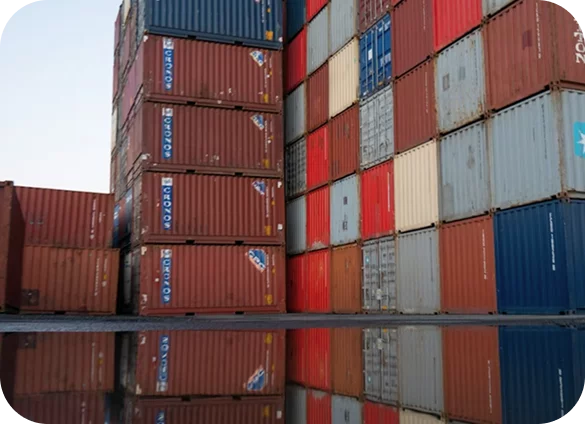
Definition of Entrepot Trade
The Chinese Wikipedia article on entrepot trade describes it as trade in which goods are not bought and sold directly between the producing and consuming countries but change hands through a third country. It also notes that ownership first passes from the producing country’s exporter to a merchant in the third country or territory, and then to the importer in the consuming country.
Singapore is a commonly cited entrepot economy: with a complete port and shipping network, merchants can consolidate goods from many countries and distribute them to nearby markets.
Three Trade Models Compared
| Comparison | Entrepot trade | Transit trade | Triangular trade |
|---|---|---|---|
| Also called | Re-export trade | Transit | Merchanting trade |
| Goods route | Producing country → intermediate country → consuming country | Producing country → through a third country → consuming country | Usually supplier country → buyer country directly; sometimes transshipped via an intermediate country |
| Ownership | Passes first to the intermediate merchant | Not transferred to a third-country merchant | The intermediate trader buys and resells, or earns a commission as a broker |
| Role of the intermediate country | Trading, warehousing and redistribution | Transport route only | Taking orders, purchasing, coordinating documents and payments |
| Customs focus | Import and re-export procedures in the intermediate country | Transit procedures | Documents if goods don’t pass through; transshipment clearance if they do |
Taiwan’s Rules for Triangular Trade Transshipment
When goods in triangular trade are actually transshipped through Taiwan, Taiwan’s Customs Administration explains that:
- The import and export declarations must be filed together, marked as triangular trade with the corresponding declaration numbers.
- Export clearance is done only after import clearance is complete.
- Foreign goods may not be marked as made in Taiwan.
- Certain mainland Chinese agricultural products subject to import quotas may not be transshipped through Taiwan to third countries (except via sea or air transshipment or the offshore shipping center).
The point of these rules: passing through Taiwan does not make goods Taiwanese. Origin is determined by each country’s rules of origin; see What Are Rules of Origin?
Which Model Should You Use?
- Goods need repacking, consolidation or redistribution at an intermediate point: entrepot trade, for example consolidating goods from several countries at one port before distribution.
- The shipping route merely passes through a third country: transit, where the focus is transport and transit procedures.
- You only need an intermediary to coordinate orders and documents, and goods can ship directly: triangular trade, with the shortest logistics route. See the triangular trade process.
In practice these are often combined. For example, bubble tea ingredients can be produced by factories in Taiwan and Southeast Asia, then consolidated at one port into a single container for overseas stores.
How Tang Sugar Can Help
Tang Sugar’s triangular and multilateral trade service plans logistics and payment routes by product and target market and coordinates commercial invoices, packing lists and bills of lading, with every structure built to be legal, compliant and auditable. To evaluate an entrepot or triangular trade route, contact us.
FAQ
What is entrepot trade?
Entrepot trade is when goods ship from the producing country to an intermediate country, where a local merchant takes ownership and then re-exports them to the consuming country.
What is the difference between entrepot trade and triangular trade?
In entrepot trade the goods always pass through the intermediate country and a merchant there takes ownership; triangular trade is about contract relationships, and the goods often ship directly from the third-country supplier to the buyer without passing through the intermediary’s location.
What is the difference between entrepot trade and transit trade?
In entrepot trade, ownership passes first to a merchant in the intermediate country; in transit trade, the goods only travel through a third country and ownership does not pass to a merchant there.
Can goods transshipped through Taiwan be marked Made in Taiwan?
No. Taiwan’s Customs Administration states that foreign goods transshipped through Taiwan in triangular trade may not be marked as Taiwan origin.
What is an example of entrepot trade?
A common example is re-export through Hong Kong: goods ship from the producing country to Hong Kong, are re-routed there and exported to the final market. As a free port, Hong Kong handles a large share of re-export trade; see What Is Hong Kong Re-Export Trade?
Is import duty paid in entrepot trade?
It depends on the re-export location. Goods transshipped through a bonded zone or free port without entering the local customs territory usually don’t pay local import duty; the final importing country still levies duty based on origin and tariff classification. Follow each country’s customs rules.
Further Reading
- What Is Triangular Trade? Definition and Who It Suits
- What Is Multilateral Trade?
- What Is a Switch Bill of Lading?
- What Is Hong Kong Re-Export Trade?
Sources
- Chinese Wikipedia: Entrepot trade (in Chinese)
- Customs Administration, Taiwan: Triangular trade (in Chinese)
- Tang Sugar: Triangular and Multilateral Trade

